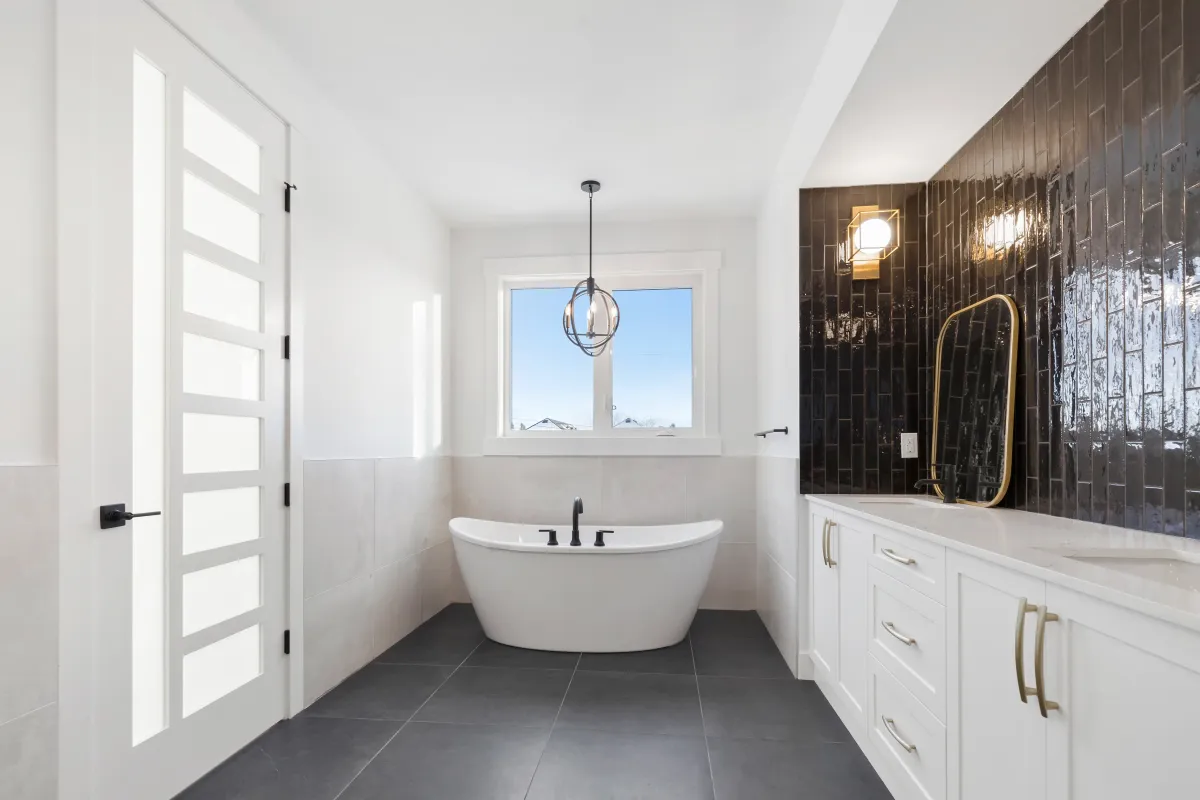
Floor Materials
There are many types of flooring materials used in residential homes, each with their own unique set of advantages and disadvantages. Here is a list of common flooring materials used in residential homes and a brief overview of their advantages, disadvantages, and cost:
- Hardwood flooring – Advantages: adds value to a home, durable, easy to clean, and can be refinished. Disadvantages: often expensive, can be damaged by water, and can be noisy. Cost: $5 to $10 per square foot, installed.
- Carpet – Advantages: soft and warm underfoot, can reduce noise, and is available in a wide range of colors and patterns. Disadvantages: difficult to clean, can trap allergens, and can be damaged by water. Cost: $2 to $5 per square foot, installed.
- Laminate flooring – Advantages: budget-friendly, durable, easy to clean, and mimic the look of more expensive flooring materials. Disadvantages: can be damaged by water, may not be as durable as other options, and may not be as comfortable underfoot. Cost: $2 to $5 per square foot, installed.
- Vinyl flooring – Advantages: budget-friendly, water-resistant, easy to install, and easy to clean. Disadvantages: may not be as durable as other options, may not be as comfortable underfoot, and may not have the same high-end appearance as other materials. Cost: $2 to $5 per square foot, installed.
- Tile flooring – Advantages: durable, easy to clean, and available in a wide range of colors and patterns. Disadvantages: can be cold underfoot, hard on the feet, and can be expensive. Cost: $5 to $10 per square foot, installed.
- Concrete flooring – Advantages: durable, low-maintenance, and can be finished with a variety of treatments to create a unique look. Disadvantages: may be cold and hard underfoot, may be prone to cracking, and may be difficult to install. Cost: $2 to $6 per square foot, installed.
